Chronic Wasting Disease, getting ahead of the spread

Chronic Wasting Disease (CWD) affecting deer and other ungulates in B.C. has been a topic of extreme concern since the first positive case was discovered in the East Kootenays in January, 2024. To date, there are four known positives with a potential for more to come given that most samples from the recent hunting season are still to be analyzed. Of the four known cases, three are within 10 km of Cranbrook.

CWD is a degenerative neurological disease that affects species in the deer family (cervids) and is caused by an abnormal protein called a prion. As the prions accumulate, they cause cell death in the brain and neurological disease, which is 100-per-cent fatal. Prions also accumulate in other tissues and may be shed by the infected animal into water or on plants and bedding through saliva, urine and feces.

We still have an opportunity to get ahead of the spread, but we need to act now to reduce the risk of CWD spreading more broadly, to stop the prevalence from growing to uncontrollable levels and to take meaningful measures to ensure the sustainability and health of our ungulate populations.

As a wildlife and habitat conservation organization we have been actively involved in CWD mitigation plans to date but are now concerned that the government is not moving quickly enough to get ahead of the spread where known positive clusters are being confirmed.

Despite the prevalence level (a percentage of cases per sample size showing a positive result) of positive cases falling within the government’s level of acceptance (2% positive per sample size) we are adamant that sampling should continue with increased vigor. For successful mitigation and to stay ahead of a provincewide outbreak we need assertive action from the relevant government agencies.

To achieve success in managing CWD the ministry needs to establish confidence and buy-in with the public. Actionable plans need to be transparent and forthcoming. These plans need to be proactive instead of reactive and need to include increased sampling in, not only the immediate area, but in neighboring urban deer populations also. This idea may seem unpleasant and unnecessary to some people, but the alternative is to witness the “town deer” suffer a slow and agonizing death and it won’t take long before the whole population is affected and decimated.

We encourage British Columbians to reach out to their elected officials and to the wildlife ministry to show your support for the mitigation of this potential pandemic here in British Columbia. We must seek out the answers and determine the next steps regarding when and who will be implementing them.

There are far too many examples of provinces and U.S. states that have failed to stop the spread, so let’s advocate for continued proactive diligence. Not just for the benefit of hunters but for everyone who enjoys nature, and of course, for the ungulates!

Let’s get ahead of the spread!

Submitted by the East Kootenay Wildlife Association

Early Registration Draw 2024

Purchase your 2025 membership by Wednesday, December 31st for your chance to win a rifle and scope setup!

This year’s prize:

Weatherby Vanguard Badlands Edition Rifle chambered in 6.5PRC. Comes with Talley rail and Talley rings topped with a Vortex Diamondback 4-12x40 DeadHold BDC reticle scope (bipod is not included).

The rifle is foresighted and ready to hit the range.

All 2025 memberships purchased before January 1st will be entered into the draw. The winner of the draw will be announced at the antler scoring event in late January.

 
SIGN UP FOR 2025 MEMBERSHIP
 

A big thank you to Westside Stores in Salmon Arm for helping us getting this organized and giving us a deal!

We have a 50/50 winner!

A big congratulations to our 50/50 raffle winner! 🎟️

Thank you to everyone who purchased tickets and helped us raise funds for the North Trench Elk Project (learn more about the project here).

Your support is making a difference in wildlife conservation, and we’re grateful for your generosity. Stay tuned for updates on the project and future opportunities to get involved!

Remove politics from wildlife management, it’s time for an independent wildlife management agency

When governments use wildlife as a pawn in political games to court favor from their base, wildlife suffers, and British Columbians suffer, too.

Examples of our provincial and federal governments ignoring science, muzzling their own scientists, and bargaining away public access to public lands are depressingly numerous.

The Committee on the Status of Endangered Wildlife in Canada has repeatedly recommended an emergency listing order under the Species at Risk Act (SARA) for the Chilcotin and Thompson River steelhead, which have dwindled to just a few dozen fish. Politicians have consistently failed to heed the advice of their own experts and use SARA to its fullest extent to protect at-risk populations.

When British Columbia was handed a court decision compelling the government to address industrial encroachment on First Nations land, it responded, but not by following the direction of the court. Instead, they reduced the moose harvest by 50 per cent and closed the caribou hunt completely across the region, while 195 gas, oil, and forestry projects were allowed to continue. 

B.C.’s approach to this settlement is deeply unnerving. The court’s ruling does not even mention hunting as a factor in the infringement of the Blueberry Nation’s Treaty 8 rights, but somehow curtailing hunting became the remedy. 

When access to the outdoors and the natural assets of this province become bargaining chips to be dealt away for industrial development and political gain, we all lose. How long will it be before unabated access to large swaths of public land causing disruption to wildlife migration, rearing and other critical habitats are lost to all British Columbians?

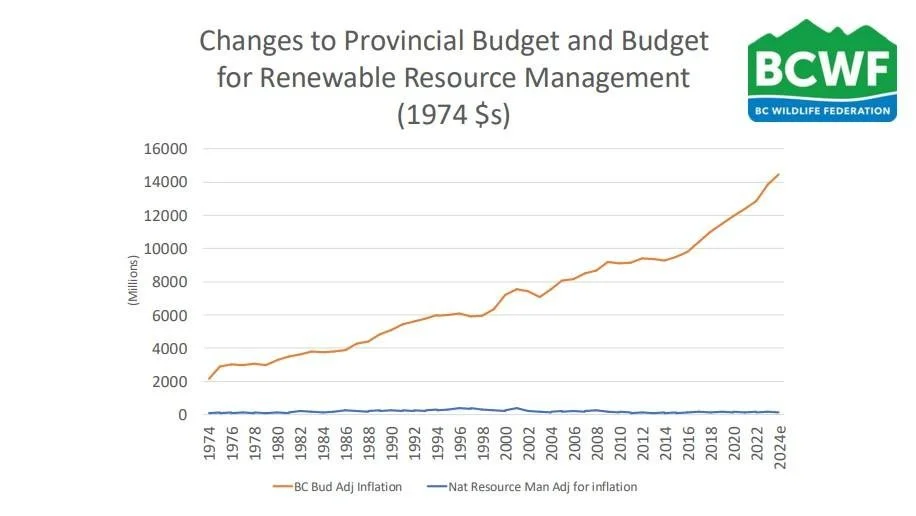
B.C. researchers have found that people believe that fish and wildlife management is not well-funded, that government is shirking its duty, and that decisions about wildlife management should be made by professionals, based on science, rather than by elected officials. In B.C. the proportion of the Provincial Budget spent on renewable resource management has steadily decreased, in 2024, less than 1% of the Provincial Budget will be spent on renewable resource management. B.C. is failing on every count.

Management of fish and wildlife should be the responsibility of an agency independent of the government, one that is not influenced by commercial interests or popularity contests. Objectives need to be legislated and science-based to ensure that all wildlife populations are afforded legal protections that force the government of Canada to act.

When the provincial government tried to rush through changes to the Land Act, citizens pushed back hard, sensing that their opportunities to enjoy the land, water, and bounty of British Columbia was at risk. Their sham public consultation process was halted, at least temporarily.

Public consultation must be genuine, if British Columbians are to embrace substantial changes in the way that public resources are co-managed. All British Columbians deserve a say in their shared future. It’s time to move away from secret negotiations, hijacked process, and agreements which are neither shared with nor debated by British Columbians until it is too late. British Columbians are tired of engaging on regulations knowing that the decision has already been made behind closed doors.

An agency that is independent of the government influence is needed to ensure that decisions about natural resources, angling, hunting, and access to public lands are made based on science, not political expediency.

Ask questions of your candidates and demand answers. Is their party prepared to put in place an independent agency if elected?